Riding Lighter
A stranger at Destruction Bay and the weight we carry without knowing why

By the time I reached Destruction Bay, I’d already made it to Deadhorse at the edge of the Arctic Ocean. The Dalton Highway was behind me. The hard part was supposed to be over. But somewhere on the long ride south through the Yukon, I was still carrying more than I needed — and not just on the bike.
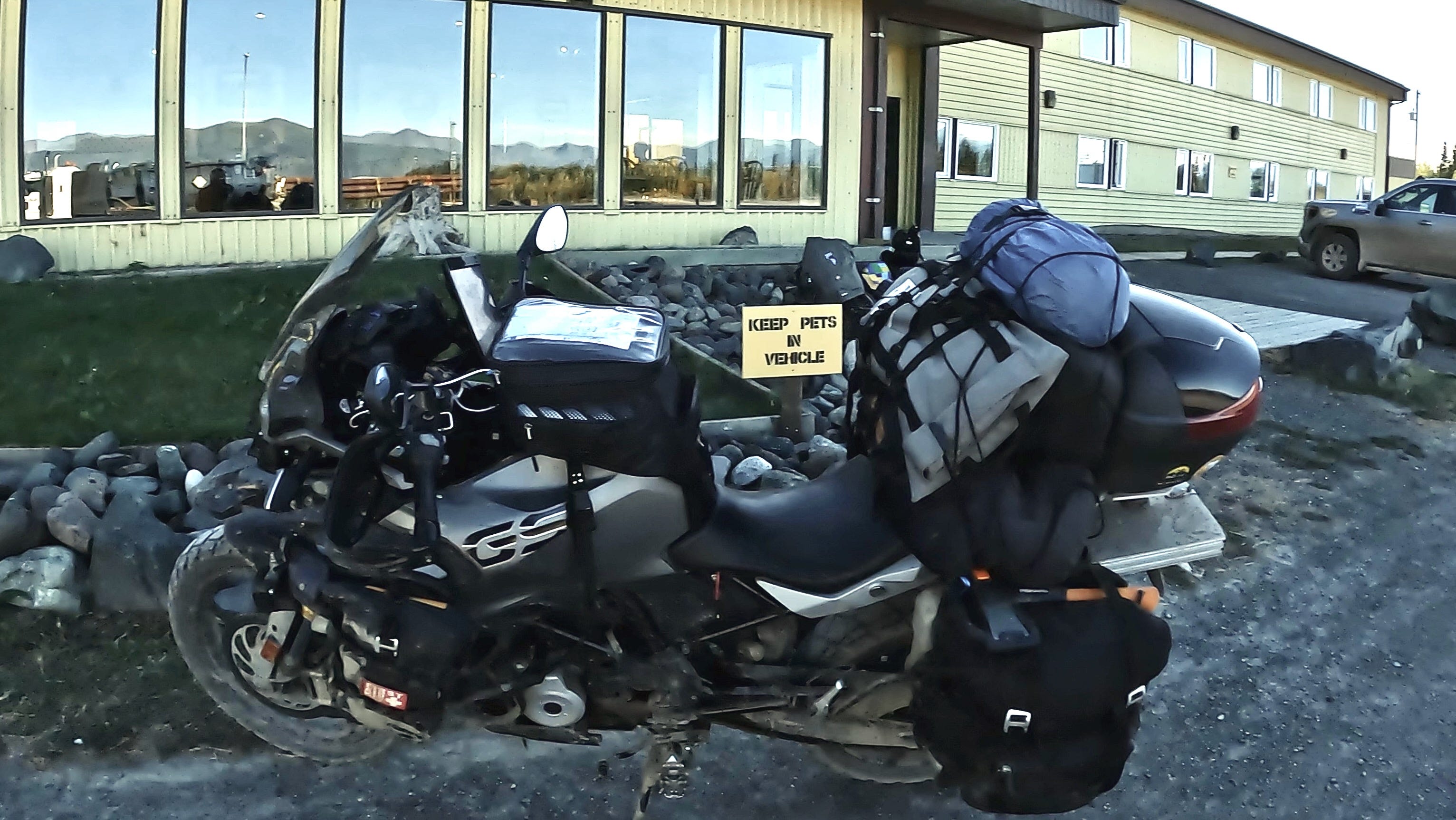
Three hours south of Tok, I stopped at Destruction Bay, a quiet outpost on the edge of Kluane Lake. One gas pump, one café, a lake reflecting sunlight under still ridges.
A stripped-down Harley pulled up beside me. Bare essentials. No saddlebags, no windscreen, nothing that wasn’t engine, frame, or wheels. White-haired rider, eyes narrowed from decades of road glare.
“Wow, now that’s a bike,” he said, noticing the mud-streaks on the BMW. “Heading north?”
“South. Coming back from Deadhorse.”
He grinned. “On that? Hell, I’m impressed. Coffee?”
“Always.”
Inside, the café was warm, almost too warm. We took the window seat where we could see our bikes — his stripped bare, mine loaded with everything I owned.
“So, what brought you up here?” he asked. “Besides Deadhorse.”
“Needed to go somewhere that wasn’t home.”
He nodded. “That’s usually how it starts.”
“How what starts?”
“This.” He gestured toward the window, the road, the horizon. “People don’t just ride to the Arctic on a whim. Something pushes them.”
“Divorce. Mother died. Work was eating me alive.”
“The usual suspects,” he said, no judgment in it. “I left after my second marriage ended. Sold the house, sold most of what I owned. Kept the bike.”
“When was that?”
“Twelve years ago.” He said it like weather. “Haven’t stopped moving since.”
“Where do you live?”
“Wherever I am.” He smiled. “Storage unit in Spokane. Rest of the time, the road.”
“Don’t you worry about breaking down somewhere remote?”
“Breakdowns happen whether you’re carrying thirty pounds or three hundred. First long trip, I had everything. Tools, spares, gear for Antarctica. Then I realized I was carrying it all to feel safe, not because I needed it.”
“What changed?”
“Broke down in Montana. Middle of nowhere. Had every tool. None of it helped. What mattered was patience — and a tow.”
I laughed. “So, you just ditched it all?”
“Gradually. Every stop, I asked: did I use this? Usually no.”
The woman refilled our mugs. Tim nodded thanks. By now I’d caught his name.
“The thing is,” he said, “all that extra weight. It’s not just physical. You spend energy managing it, protecting it. You stop experiencing the ride. You’re managing an inventory.”
I thought of my morning rituals. Straps, zippers, redistribution.
“You made it to Deadhorse and back on that bike,” he said, nodding outside. “Trust yourself more. The gear less.”
We finished our coffee in easy silence.
Outside, he pulled on worn gloves.
“Where you headed next?” I asked.
“Wherever the road wants to go,” he said, and rode off.
I watched him disappear along the lake. His bike carried almost nothing. Mine carried everything.
That evening, I pressed on to Whitehorse under a brooding sky, still thinking about Tim. About what to carry and what to let go.
This is an excerpt from my forthcoming memoir, Throttle On: Unstuck on the Way to the Arctic Ocean — the story of a solo motorcycle journey from Austin to the Arctic and back. Follow along for more excerpts from the road.
Subscribe below to get new excerpts delivered directly to your inbox.